
Your Safety
Essential safety guidance for visitors, swimmers, paddlers, and walkers exploring Rhosili Bay, Worms Head, and the surrounding Gower coastline.
1. Tides & Worms Head Tidal Causeway
The Bristol Channel has the second-highest tidal range in the world (over 10 metres on spring tides). Water moves exceptionally fast across shallow causeways and sandflats.
Crossing to Worms Head
The tidal causeway to Worms Head is only open for approximately 2.5 hours either side of low water.
- Check tide times before you set off at the NCI Lookout, the National Trust Visitor Centre, or online.
- Never attempt to cross or return once water begins washing over the causeway. Currents in the Sound are fierce, and multiple rescues occur every year due to late crossings.
- If stranded on Worms Head, stay on or go back to the grassed area and call 999 (Coastguard) or alert NCI Worms Head. Do not attempt to swim across the Sound.
Go to the Bell
If you are cut off with no phone signal, make your way to the emergency bell on Inner Head and ring it continuously — it puts you in clear view of the lookout station and alerts our watchkeepers directly. The what3words for the bell's location is ///deep.develops.indicated.
This Really Does Happen
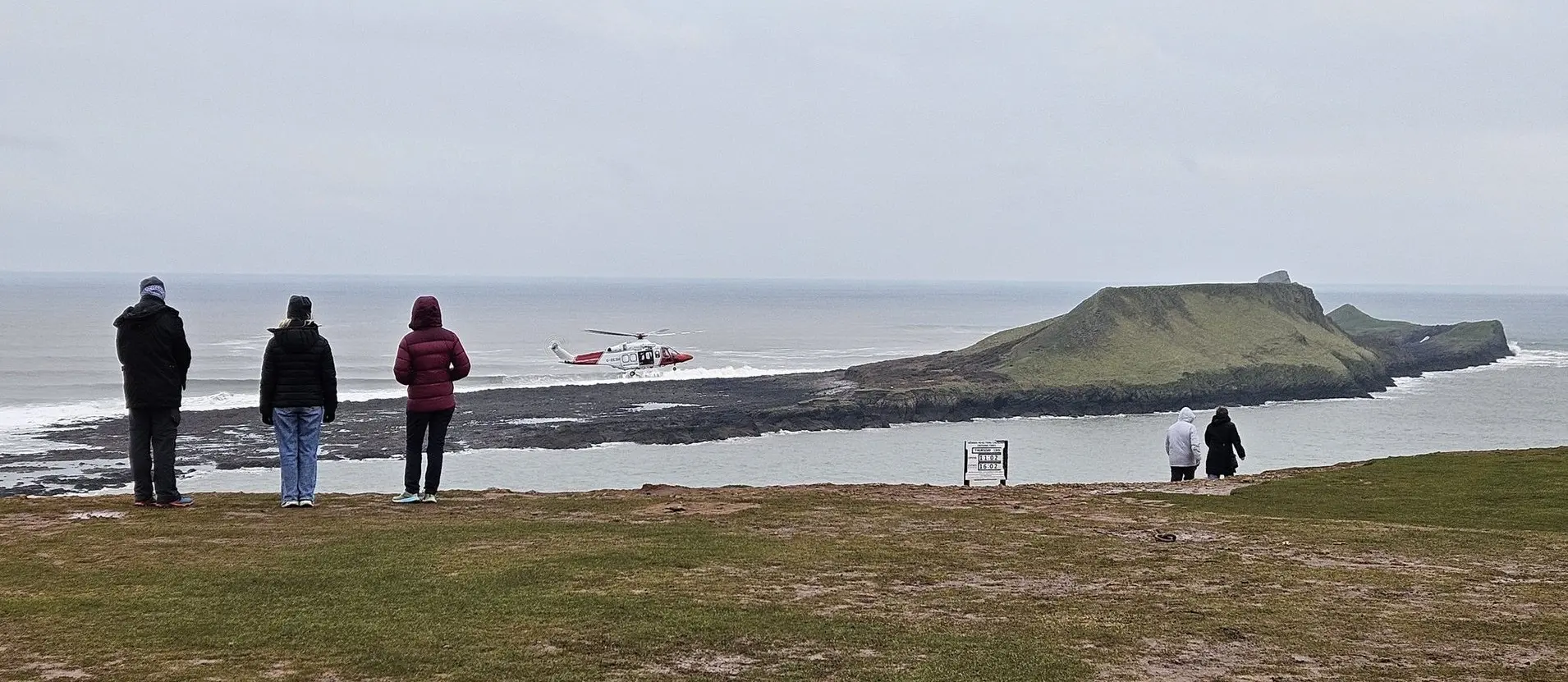
Every year, a handful of visitors misjudge the crossing and get cut off on Worms Head. WalesOnline covered a recent incident, including the moment the warning siren sounds and an NCI Worms Head volunteer explaining why the causeway rules matter —read the full story on WalesOnline →
Sadly, it can end in tragedy. In May 2012 an experienced outdoor instructor who had camped overnight on the Worm overslept, then tried to cross as the causeway was already flooding. He was swept away and drowned. The emergency bell was placed on the island after his death. If you’re cut off, stay put and call 999 — never try to wade or swim back.read the inquest report on WalesOnline →
Staying Out Overnight?
Worms Head lies within the South Gower Coast SSSI (Site of Special Scientific Interest) and the Gower National Landscape. Overnight stays on the headland are strictly prohibited — by the National Trust, who manage the land, and by the SSSI conservation rules that protect its breeding seabirds and hauled-out seals. In practice, it does happen, mainly among night anglers.
If that's your plan, please call in to the Lookout Station beforehand and let the watchkeepers know (07392 327216), or give us a shout on VHF Ch 65 before dark. If the station is closed when you set off, leave a note under the door with your plans. Without that heads-up, anyone who spots a light or a figure on the headland after dark is likely to report a person stranded — which can trigger an RNLI lifeboat launch for someone who was never in any danger.
2. Cold Water Shock & "Float to Live"
Water temperatures in the Bristol Channel rarely rise above 15°C–16°C, even in mid-summer. Falling unexpectedly into cold water triggers an involuntary gasp reflex and rapid breathing, which can cause you to inhale water and drown.
If you fall into water unexpectedly, Float to Live:
- Tilt your head back with your ears submerged.
- Relax and try to breathe normally. Fight the urge to thrash or swim.
- Move your hands gently to help stay afloat if needed.
- Spread your arms and legs to improve stability.
- Once your breathing is under control, call for help or swim to safety.
"Float to Live" is the RNLI's evidence-led water safety campaign — since 2017, over 50 people have contacted the RNLI to say floating helped save their life.
Watch the official Float to Live film3. Rip Currents & Surf Hazards
Rhosili Bay experiences strong Atlantic swell and complex surf patterns. Powerful rip currents run seaward along the length of the bay, particularly near sandbanks, river outlets, and rocky outcrops like the Spaniard Rocks.
How to Spot a Rip Current
- Discoloured, sandy, or foamy water heading out to sea.
- A noticeably calmer gap between incoming lines of breaking waves.
- Debris or seaweed moving rapidly seaward through the surf line.
If Caught in a Rip Current
- Do not swim against the current — you will exhaust yourself.
- Swim parallel to the shore until you are out of the rip.
- Once clear of the pull, make your way back in toward the beach.
- If you cannot escape, Float to Live, raise one hand, and shout for help.
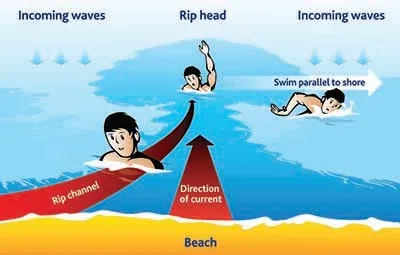
Watch the RNLI's short film on getting out of a rip current safely.
How to Get Out of a RipRNLI's free "In the Surf" guide covers rips, waves, and tides, plus safety tips and kit for surfing, bodyboarding, windsurfing, kayaking, kitesurfing, and paddleboarding.
Download the In the Surf Guide (PDF)4. Offshore Winds & Inflatables Hazard
Beach inflatables (dinghies, flamingos, toys) are designed for swimming pools, not open coastal waters.
Rhosili's prevailing easterly or north-easterly breezes can look calm at the base of the cliffs, but will blow an inflatable miles out into the Bristol Channel within minutes. Do not use toy inflatables at Rhosili Bay.
Know Your Buoys: the Helwick West Cardinal
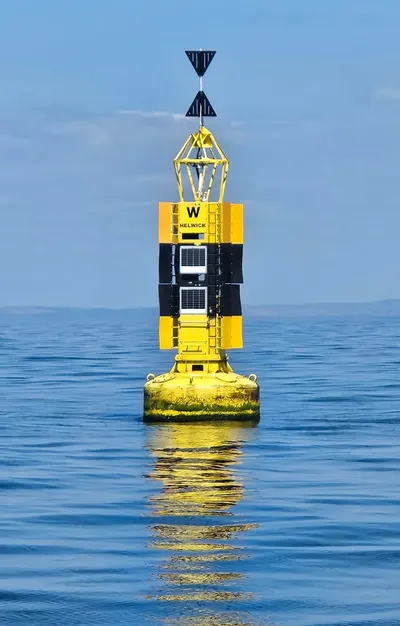
Out in the bay you may spot this yellow-and-black buoy. It’s the West Helwick cardinal mark, which marks the western end of the Helwick Sands — a long, shallow sandbank lying off the Gower coast, running west from Port Eynon.
How to read it: cardinal marks tell you which side of a hazard the safe water is. The two black cones on top point towards each other (think of a “W” for west, or the waist of a wine glass), and the colours run yellow–black–yellow. It means pass to the west of this buoy.
If you’re out on a boat, kayak or paddleboard, keep well clear of the Sands: seas can break heavily over them in rough weather.
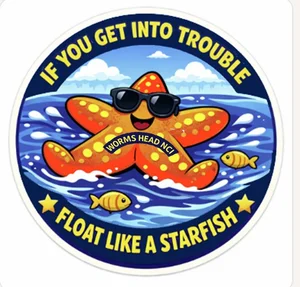
Safety Stickers for Younger Visitors
Designed by one of our own volunteers, these fun stickers help younger visitors remember our key safety messages. Young visitors are welcome to come along to the Lookout Station and choose a sticker to keep.
Looking for more for younger visitors? Our Kids' Corner has dragon facts, seal facts and a causeway treasure hunt.



Doing Something Specific on the Water?
The hazards above apply to everyone. For advice specific to what you're doing, see the Activity Safety & Reference page:
Activity Safety & Reference →